
Celebrating the Sea
In the middle of a national crisis, I've been working on a website

Welcome, friends! I’m so glad you’re here! I’ve finished a project that I’m excited to share with you.
Posts and podcasts at Nature :: Spirit are all free, always free, though if you’re inspired, and if you’re able, I deeply appreciate your paid subscription. Each one is a tremendous boost. But however you participate, thank you for being here.
May all beings find peace.
It started one night at 2:30 in the morning. I’m no stranger to insomnia, but 2:30 was a bit extreme even for me. I’d been thinking that my author website was way overdue for an update, so when I found myself wide awake in the wee hours I picked up my phone and began browsing.
I scrolled across some nature-themed sites noting what I liked: warm colors here or smooth navigation there, the inspiration in this one or the welcoming feel of that one. I spent an hour or two opening tabs, saving bookmarks. It was January 3, 2025.
Just two weeks later an inauguration took place that horrified me in every possible way. The night before the inauguration I opened a new graphic design program and began experimenting, trying to translate onto the screen the visions that were rolling around in my head. I remember thinking, “It’s good I have something to focus on right now.”
Nature and art can save us
This wasn’t the first time I’d spent a national crisis creating a website. When 9/11 happened I was putting together a site for a small creek preservation group in my neighborhood in Oakland, CA. During those weeks I learned that having a creative project to focus on can help me process trauma, especially when that trauma is happening far away and there’s little I can do to help.
And as artists have been saying since forever, art can save us. When the unimaginable happens, creating something beautiful or aspirational helps tether us to a better world. The shock and horror we’re feeling have to share heart space with hope.
Even better when the creative project is focused on nature, because the next best thing to touching trees or strolling among them is looking at images of them. Simply looking at pictures of nature stimulates calm and relaxation.
So creating that little website in 2001 kept me focused on a mission: loving and caring for our neighborhood creek. It rooted me in flowing water and the beauty of overarching bay trees and the love of kindhearted neighbors. It kept me steady. It helped me land in the post-9/11 world a little more gently—less overwhelmed, more grounded in purpose.
So on the eve of the inauguration last year, feeling as many of us did that terrible things were about to happen—and not being able to do a damn thing about them because all the terribleness still lay in the future—I dug in to creating my new website.
One big catch—well, two
There was just one catch—well, two really. Two big catches.
(1) I didn’t know how to create websites.
(2) I didn’t know how to use a digital design program.
Learning just one of these would have been huge, and knowing almost nothing about either of them should have stopped me cold before I began. But I was blithely clueless. I mean, I love steep learning curves—how hard could this be?
As it turns out, very hard. Harder than I expected. Much, much harder.
The design program
Merely learning the new design program was a challenge. We had just purchased the Affinity software (you don’t have to buy it now—it’s free! and beautiful!), and I started from scratch learning how to use each tool. How to place an image. How to select an area in the workspace. How to create a shape. How to draw.
Each task involved its own steep learning curve. Every tiny step forward meant backing up to watch at least six YouTube videos first. Plus, my coordination tends to be loosey-goosey (it’s part of my autism), so when I learn any new motor skill it usually takes me longer than most to get the hang of it. And working with digital graphics requires a fair amount of motor skill.
The work was slow. It was painstaking. I spent several whole days creating a section divider before realizing that it wouldn’t work at all because it was a pixel image and—wait! there’s something called vector images instead? But how to turn my pixel image into a vector? More how-to videos, more practice with the drawing tools, more hours of futzing.
But the work was fun too, because it meant messing with color and design—a break from my usual life of creating in words. And I had a creative project to focus on while the worst in Washington was taking shape. Because art can save us, right?
Tim and I had decided not to go with a website builder like Squarespace or Nicepage because he was planning to code the site, which would save us from a monthly subscription fee. And we were ready to leave WordPress for a number of reasons.1 Tim was drawn to Kirby, a much smaller platform with a good-spirited community of users around the world. Programming in Kirby would give us more creative freedom, more independence from corporate pricing. Plus, in Kirby it was simpler to make text edits globally across a whole site.2
So Tim dug in to Kirby, preparing to code, while I pushed on in Affinity.
Creating a website
I knew what I wanted to show at the top of the landing page. (The hero image—I’d just learned the term.) This website was going to celebrate the sea.
The mysterious sea! It had to be the centerpiece—the focus and container for the whole design. After all, the ocean holds and shapes and nourishes every life on these islands. And that’s equally true for everyone on the continents too. Each of our lives, wherever we are, is enfolded and made possible by the sea.
The ocean is the reason Tim and I moved to Maui, and I am thinking about it every day and writing about it (in my next book!). Swimming in it is pure joy.
Our cottage has a faraway view of a small stretch of bay, and staring at that corner of sea is endlessly comforting. Its color changes by the hour. Its surface—choppy or calm—predicts the weather. Just resting my eyes on it for a few moments is calming.
I wanted the ocean on my website too—front and center for every viewer.
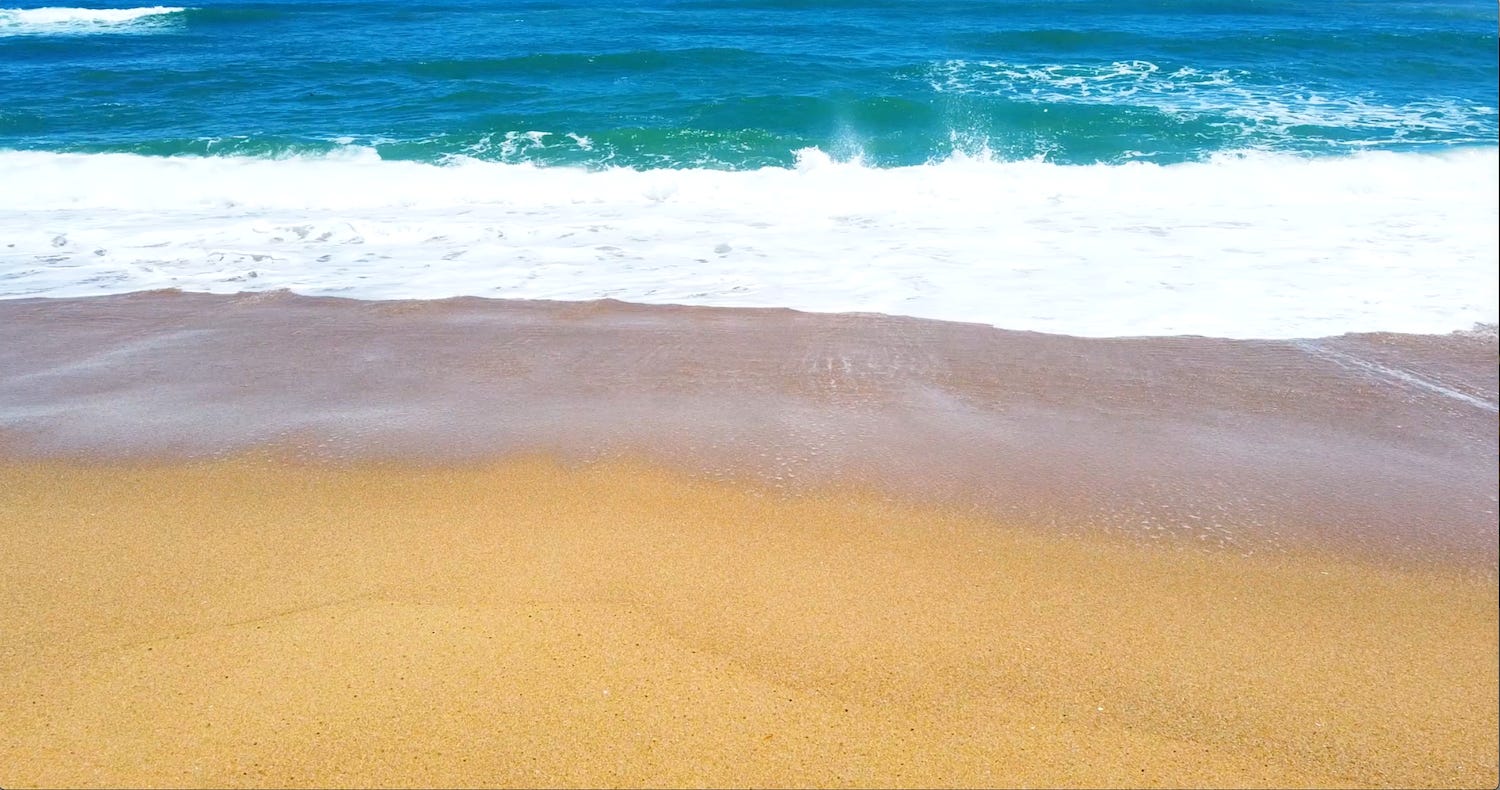
So I spent hours checking out ocean videos before finding one exactly right—a soft bubbly edge of water on the sand. A surf height that was soothing, not scary, with waves that rolled in a reassuring rhythm. Plus the most exquisite deep blues in the distance, the exact shades of turquoise and sapphire that thrill my heart when I gaze across the water here.
I bought the license and downloaded the video. I took a screenshot from it and dropped it on the front page as a placeholder.
But then what? I had no clue. How do you actually structure a site? Do you make the whole thing a single scrolling home page, like a lot of sites these days? If not, what other pages should I create? Should the menu bar be sticky, or should it disappear? How do I choose?
I wish I’d stopped and studied basic web design right then and there! Making any little decision required a thousand prior decisions, and I seemed to have no idea how to make any of them.
Several weeks later I did finally stop and watch some web design tutorials—which inspired a few face-palms. I kept going.
204 blue
Water shaped the project all the way through. Sampling the blues in the still photo with the color-sampling tool in the design program led me to the shade of blue that organizes every appearance of blue on the site. It’s the blue that in the hue-saturation-lightness system, or HSL, is hue number 204.
Finding the unifying color lit a creative fire. I started experimenting with graphics, imagining menu bars.
And the instant I darkened 204—so very dark!—I found the navigation bar. That deep rich blue slid into place next to the ocean with the clarity of a ringing bell. I felt like I’d just dropped anchor in the deepest sea.
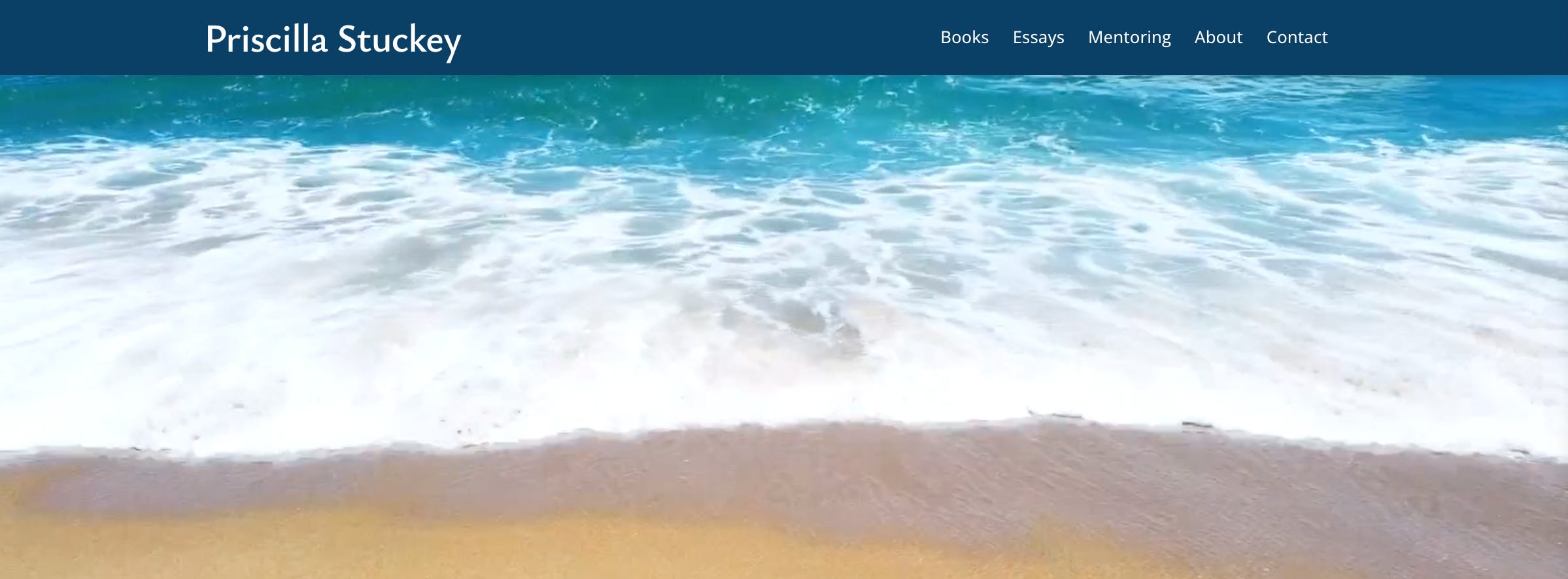
Several weeks later confirmation for my choice of 204 blue came unexpectedly—out of the blue, as it were! There in my inbox was a message from the Hawaiʻi State Public Library System announcing their brand-new logo:
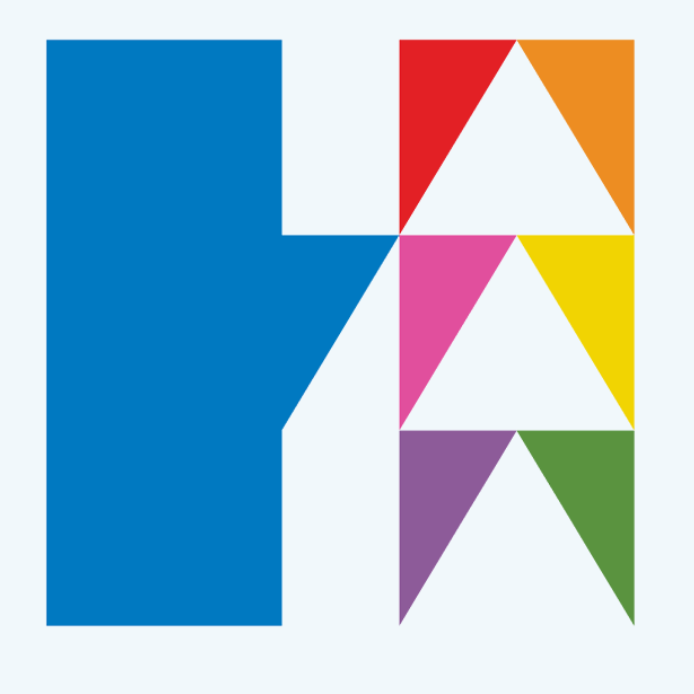
Isn’t it gorgeous? A large H made of one big blue block on the left—the sea—facing and anchoring six brightly colored islands on the right.
I took one look at that blue. It seemed familiar. I dropped the image into Affinity and sampled the color: HSL 203. Almost identical to my 204. Their graphic designers think so too—this really is the color of our seas!
Finishing the design
I pushed on with the design. I put in two weeks of full-time work, then three. I agonized over font choices, complementary colors, background shades, call-to-action buttons. At the end of four weeks I couldn’t believe how little progress I’d made. At the end of six weeks I had a rough design for most pages but no idea how to finish them. Colors and graphics and words were in place but not tied together. The site lacked coherence. The project was far from done.
But I was done. Worn out. Completely out of ideas. Was any of this workable anyway?
Tim wasn’t yet ready to start coding, so I put the project away. I would come back to it later when I was fresher.
The months slid by.
Two things continued not to happen: I didn’t magically grow more ideas. And Tim didn’t find time to code the site.
Help is on the way!
By September we were ready to ask for help.
Tim surveyed the available Kirby developers around the world and approached one close to us (relatively speaking!): Richard the Brave, a husband-wife team on Vancouver Island, British Columbia.
They took a look at my files, and they didn’t laugh! At least not to my face. They simply got to work.
Richard and Story Terrick have been a dream to work with. They are kind and considerate, and most of all they’re intuitive. Every improvement they suggested in text or design served the message of the whole. It enhanced the vision.
Here I was, a career editor, all my life working to give sensitive feedback to often-beginning writers, and now I was the brave beginner myself, needing some wise counsel. Richard and Story showed me what it feels like to receive feedback that is patient and warm and kind—what a gift! I found my editors! They just happen to work in websites instead of books.
And they are technically skilled! And detail oriented! They refined the vision I handed them and created new structures as needed. They massaged coherence into the pages across the site. They guided me toward better fonts—way better fonts. They improvised new decorative touches. They teased the essay archive into a beautiful, accessible order.
Their graceful work shines on every page.
Saved by nature
And I am proud of the results. Please take a look around and enjoy!
If you want to just sit beside the sea and lose yourself in its rhythm, feel free. (If you choose reduced motion on your screen or you block auto-play, you’ll see a screenshot from the video instead.)
Or go a little deeper and check out previous essays or read about my books or the mentoring services I offer.
Just as in those long weeks a quarter-century ago when I dug in to a website to save my soul during a national crisis, working on this site for six weeks gave me something positive to focus on at a time when I could easily have dived straight into despair. Staring at the ocean kept my heart open. Thinking about what to say made me reflect on what I have to offer during this rocky time of transformation. What kind of world do we want to create right now?
For the new world is coming now—right in the middle of these breaking-down times. In Minneapolis and other cities people have been showing us exactly what it looks like—the life that is possible when people trust their neighbors and organize to take care of each other. In a jubilant Superbowl halftime show celebrating all the people of the Americas—and in Spanish! the language of more than half of the hemisphere—we can taste the new world coming. How rich and diverse and joyful it can be! By living differently in the midst of oppression, people bring a new world into being. And by sharpening our vision of that new world through music and image and dance, people sharpen our hunger for that new life. We can build a happier world! One with more love and more justice and more celebration than we’ve had before.
Staying steady
In the more than a year that has passed since I woke up at 2:30 in the morning and began scrolling, the agents and thugs of the federal government have tried in every possible way to sow hatred among us and destroy all that is good. But they have not succeeded. Because people all around the country are remembering their better selves. Staying steady in their conviction and compassion, their joy and determination. Remembering how to be human.
And for the six weeks that I worked on my website, staring at a picture of the ocean helped me remember that too.
So whatever helps us stay rooted in our biggest heart—that is our assignment now. To not fall into despair or apathy but instead to remain open to possibility. To plant ourselves in what is true and kind and what sustains life. To celebrate what is good and freeing and life giving.
Because in this one big way we always have the power to help, no matter what or where the crisis: we can remain firm in our commitment to compassion and fairness and equality and joy. And we can keep making them real in the world.
Staring at the ocean for those long weeks helped keep me steady. It reminded me to keep my heart open—as open as the vast and rolling sea.
Maybe it can help someone else remember that too.
How are you staying steady in these times? Do you have a daily practice of connecting with nature, either outside or indoors? Do you have website adventures to share? Let us know in the comments!
If you enjoyed this story, please hit LIKE before you go! And if you found something useful here, please share!
For digging deeper
For a meta-study reviewing 37 different studies on how exposure to nature affects people physiologically, see Hyunju Jo et al., “Physiological Benefits of Viewing Nature: A Systematic Review of Indoor Experiments,” International Journal of Environmental Research and Public Health 16, no. 23 (2019): 4739. The research overwhelmingly shows that when people are indoors, being in direct contact with a part of nature, such as an indoor plant, stimulates calm and relaxation. But merely looking at images of nature does the same thing. For example, in one study university students were shown a video of driving along roads that were lined either by nature scenery or by human artifacts. The students who viewed the drive through forests or fields enjoyed lower blood pressure than the others.
For just a few of the ways the ocean makes life on dry land possible, see “Why Is the Ocean Vital for Our Survival?” from the Woods Hole Oceanographic Institution.
For some beautiful short videos showing how we evolved from fish in the sea—and which fish!—and what we can do to make sure that life on Earth can thrive, see “The Ocean Makes Earth Habitable” at the Ocean Wise site.
Minneapolis is not the only city where people have organized to take care of each other in the face of federal raids. Kelly Hayes is an abolitionist and organizer in Chicago, and during the Midway Blitz she wrote about the relationships of mutual aid and support that people developed there. In a speech written for a recent neighborhood assembly in Chicago, she writes, “Our enemies never imagined that their actions would bring us together this way — that we would reach for each other, rather than scatter or cower in fear. They fucked around and brought out the best in us, and now we know that this is what resisting fascism looks like.” Read the whole speech, “The Muscle Memory of Care,” at her website.
Check out my genius web developer, Richard the Brave, home of Richard and Story Terrick.
For more on Kirby as an alternative to WordPress, see “The Power of Less: How Kirby CMS Transformed My Web Experience,” by Shawn Maholick, April 8, 2024.
I found my online Affinity tutor in Ally Anderson of Affinity Revolution. She takes things at just my speed and always gives detailed step-by-step instructions. She made Affinity so fun that now I mess with graphic design—often through her courses—anytime I need a recess and want to go outside words to play.
The WordPress world is so huge, with so many users, that its platform is the target of an overwhelming number of bad guys. So maintaining any WordPress site takes extra vigilance to keep them out. For years Tim ran a WordPress maintenance service that did exactly that. Also, backstage drama within the WordPress community was ramping up at the time.
In Kirby, what you write on your site remains a text file rather than being translated into a database, so you can change text across a site instantly. For example, I had used sentence caps for the titles of all the essays on my old site and wanted to switch to title caps. In WordPress I would have had to pull up all 200 titles and edit each of them one at a time. If you’ve ever had to do this with even one or two titles you know how mind numbing it is. In Kirby it was done with a few clicks.
Your new website is beautiful! Congratulations. It definitely has a vibe. Thanks for the behind the scenes tour. And especially for the reminder of the pockets of mutual aid and joy that keep popping up. It feels like an immune response. We are the white blood cells.
this holds meditation together is simple and durable: “Staring at the ocean for those long weeks helped keep me steady.”